
Track Me: Safety Check-In
Designing a proactive staff safety system for healthcare workers in high-risk environments.
Responsiblities
User Research & Product Discovery / Product Strategy & UX Design / Prototyping & Validation / Cross-Functional Collaboration
Duration
4 Months
Industry
Healthcare SaaS
Platform
Staff Critical Comms Mobile App (Android)
Executive Summary
Healthcare workers often find themselves in situations where raising a duress alarm may be difficult or impossible.
As a Senior Product Designer, I led the end-to-end design of Track Me, a proactive safety feature within Concentric Care Reach, which enables staff to activate recurring safety check-ins before entering high-risk situations. If a user fails to respond, the system automatically raises a duress alarm.
The result was a scalable safety solution that strengthens staff protection while fitting seamlessly into existing clinical workflows.
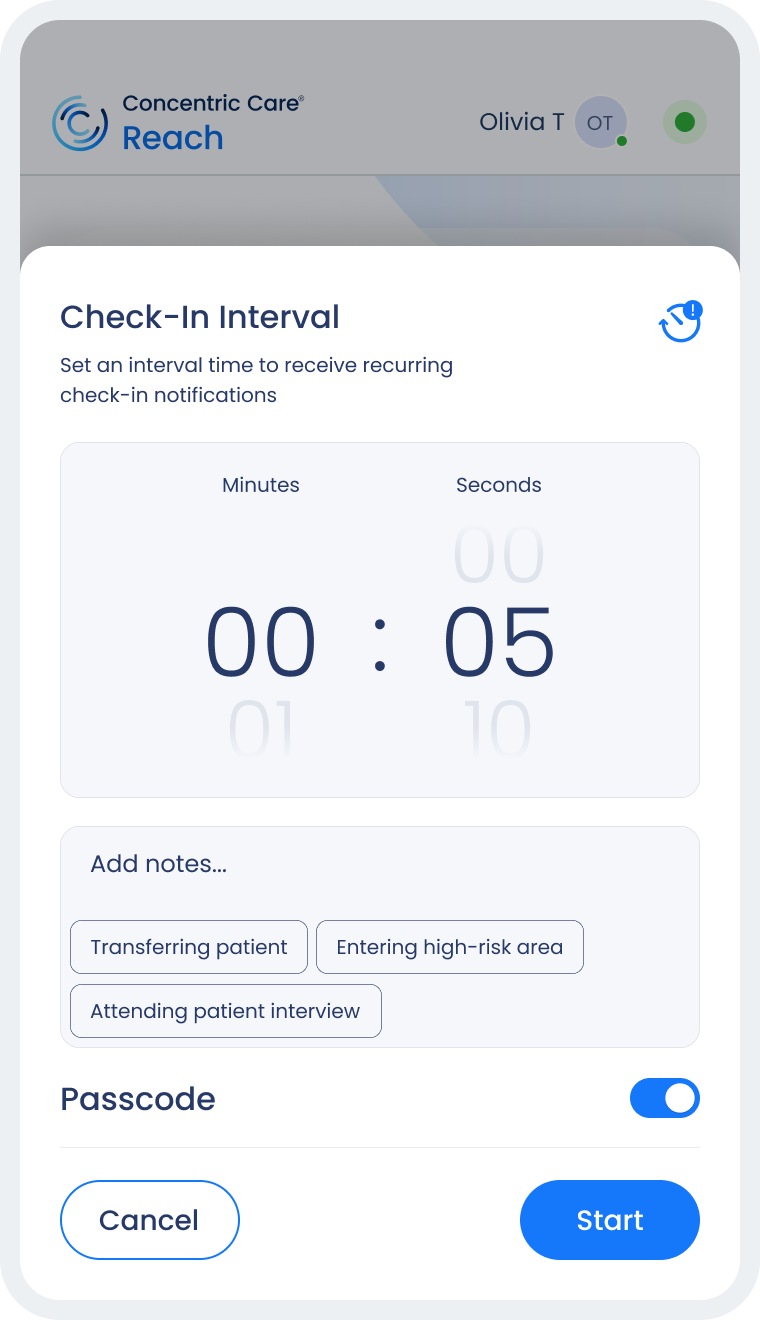
Set a time for the recurring check-in interval.
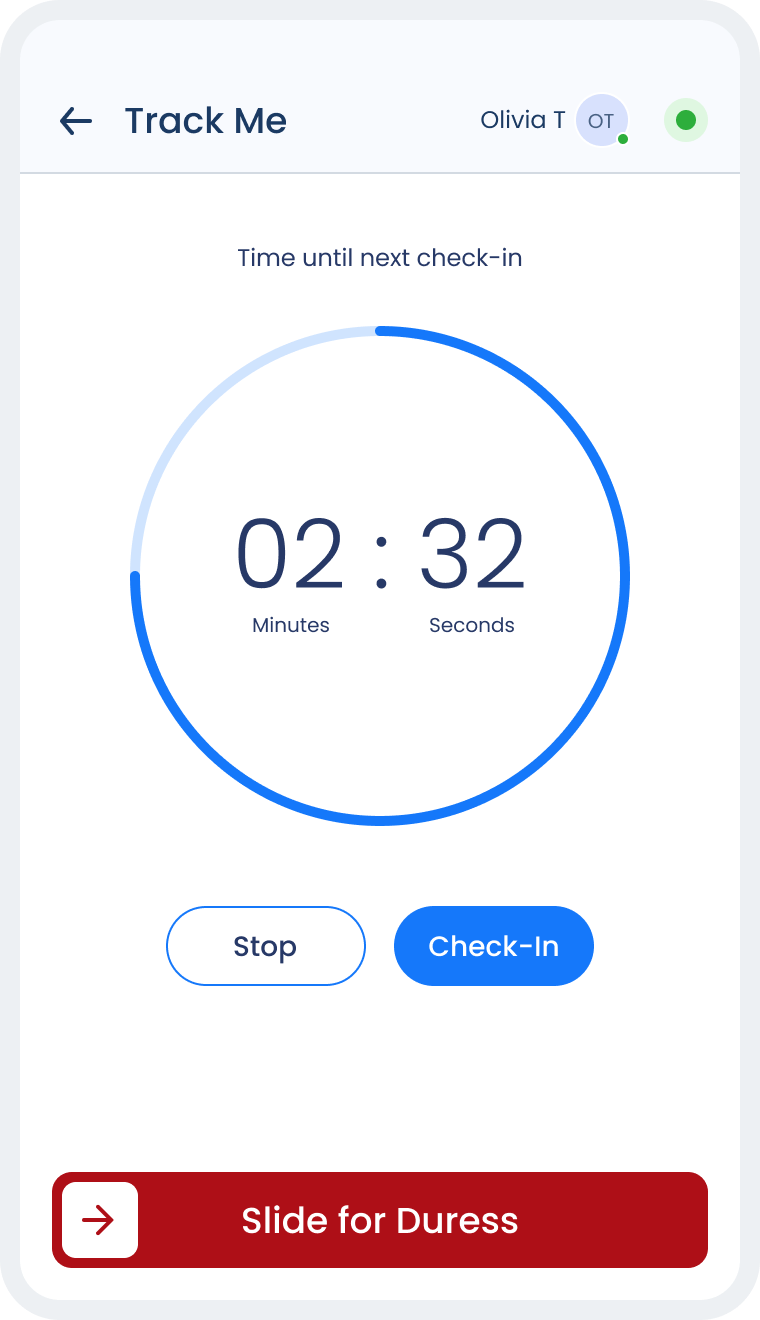
A countdown timer starts.
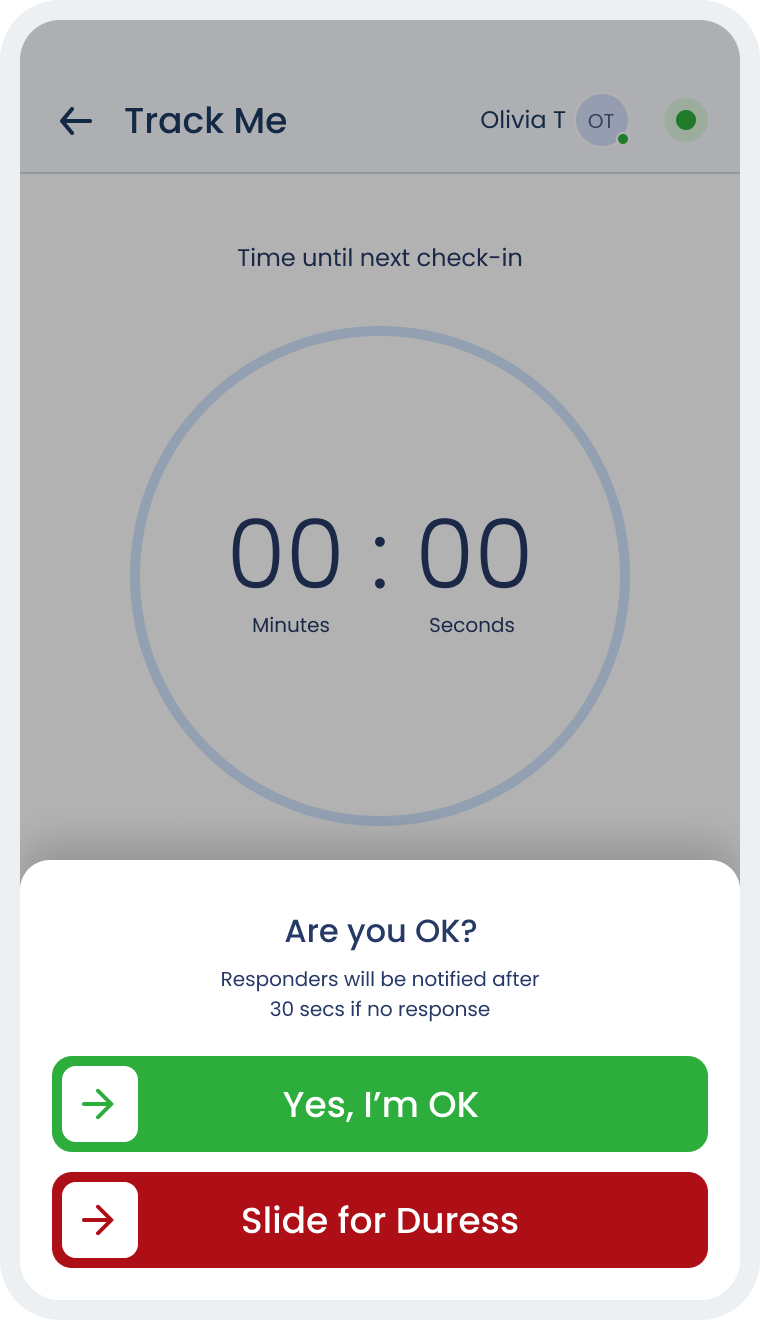
The system periodically requests confirmation of safety.
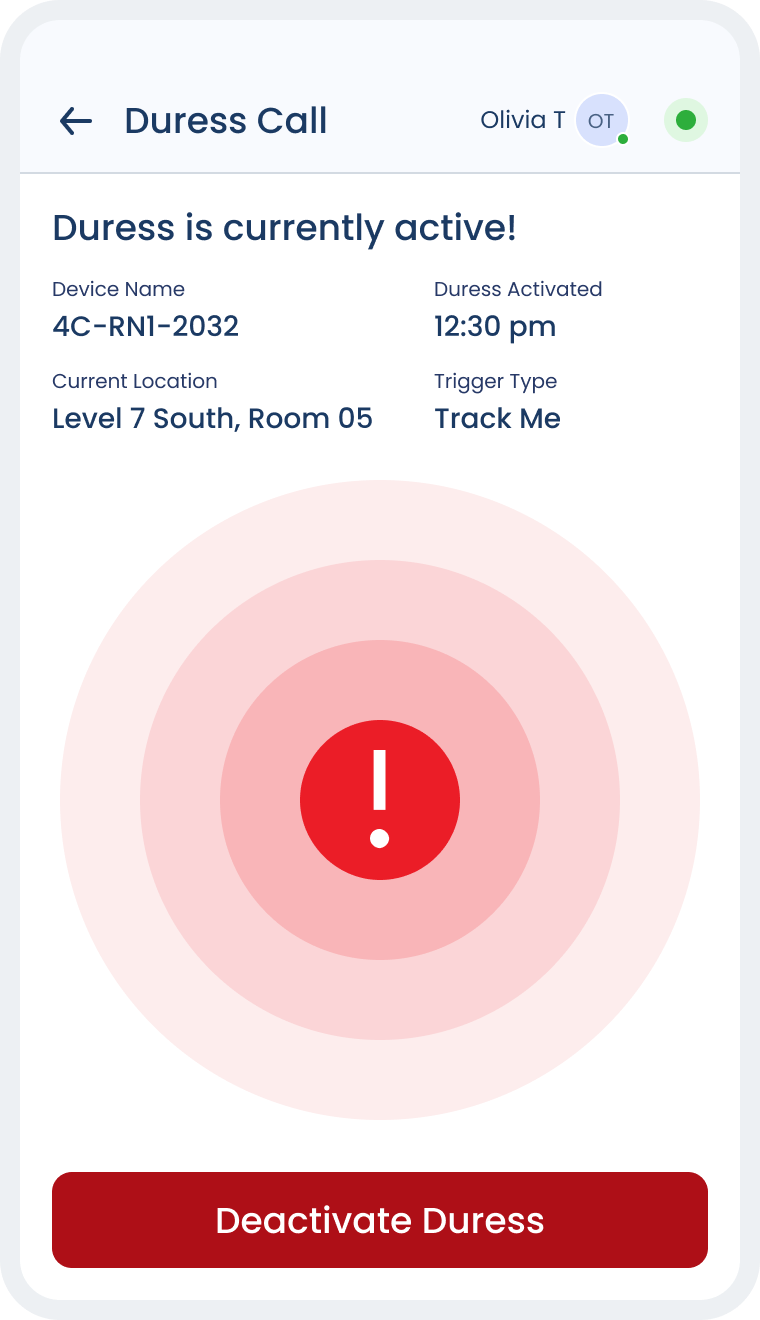
If there is no response, the system automatically raises a duress alarm.
The Problem
Traditional duress systems rely on staff manually requesting help during an emergency.
This creates a critical safety gap when a staff member is unable to access their device or discreetly raise an alarm.
The challenge was to design a proactive safety mechanism that could protect staff even when they were unable to actively request assistance.
Research & Discovery
To understand the problem space, I conducted stakeholder workshops, workflow reviews, user scenario analysis, and market research.
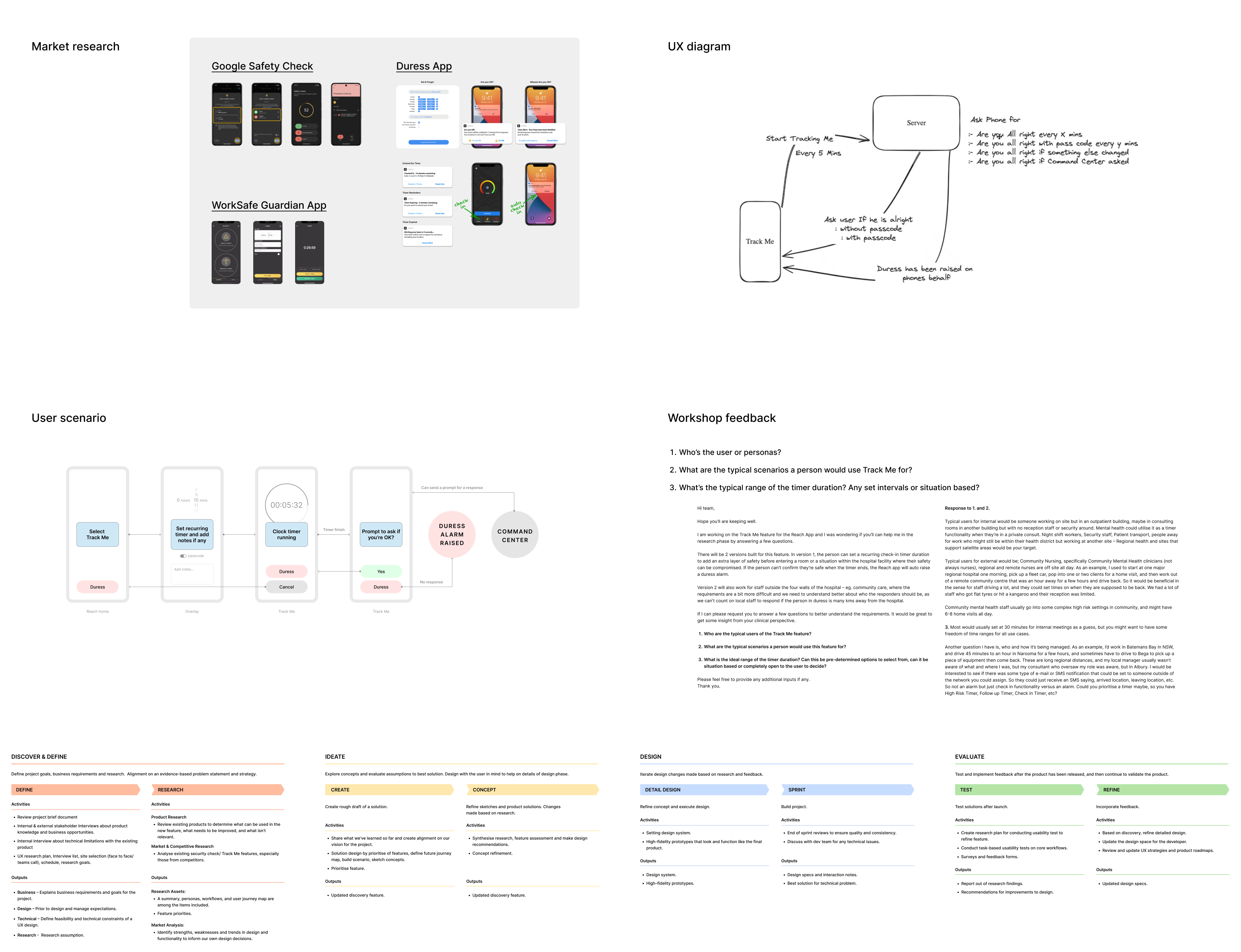
Key Insights:

Existing safety systems are largely reactive.

High-risk situations are often predictable.

Emergencies can escalate before help can be requested.

Any solution needed to be fast, simple, and fit existing workflows.
Rather than creating another alarm system, the opportunity was to provide an additional layer of protection before a situation escalated.
Track Me shifted the safety model from reactive emergency response to proactive risk prevention.
Product Vision
Enable healthcare workers to proactively safeguard themselves before entering high-risk situations and automatically request help when they cannot do so themselves.

Product Strategy
Three guiding principles informed every design decision throughout the project.

Safety First
Protect staff even when they cannot interact with their device.

Minimal Cognitive Load
Keep activation and check-ins fast and effortless.

Escalate with Confidence
Automatically trigger reliable escalation pathways while minimising false alarms.
User Journey & Flow
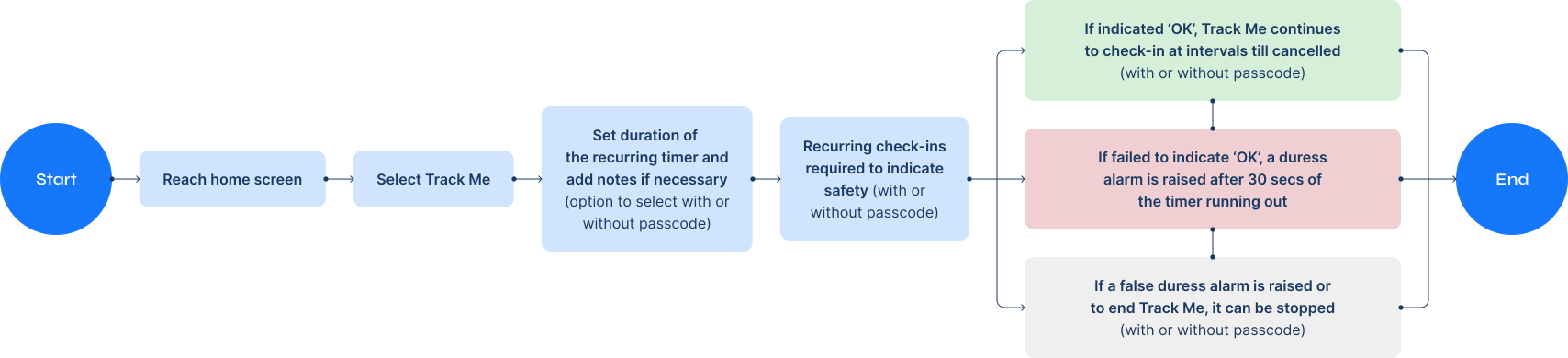
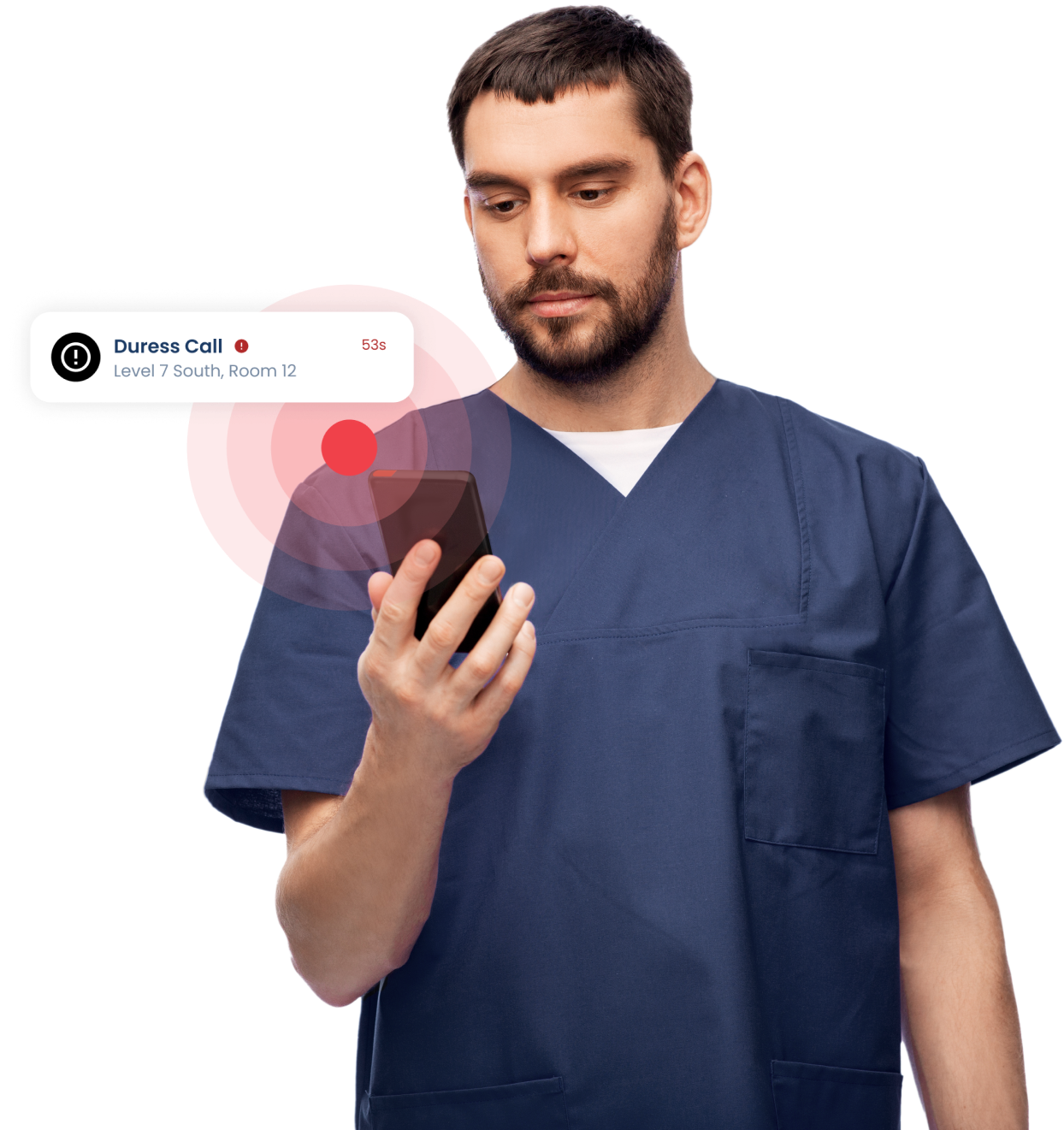
Romana, a nurse transferring a patient to a mental health ward, activates Track Me before entering a higher-risk environment.
The system periodically requests confirmation that she is safe. If she responds, monitoring continues. If she fails to respond, a duress alarm is automatically raised.
This provides an additional layer of protection without requiring manual intervention during a critical event.

The workflow was designed to minimise complexity while ensuring clear escalation pathways.
Users can quickly activate monitoring, continue their task uninterrupted, and rely on the system to escalate incidents when required.
Several approaches were explored, including traditional duress alarms and GPS-based monitoring.
Recurring safety check-ins provided the strongest balance between usability, reliability, privacy, and operational simplicity.
This approach enabled proactive protection while integrating naturally into existing workflows.
Design Exploration
Multiple concepts were explored to determine the most effective balance between visibility, simplicity, and safety.
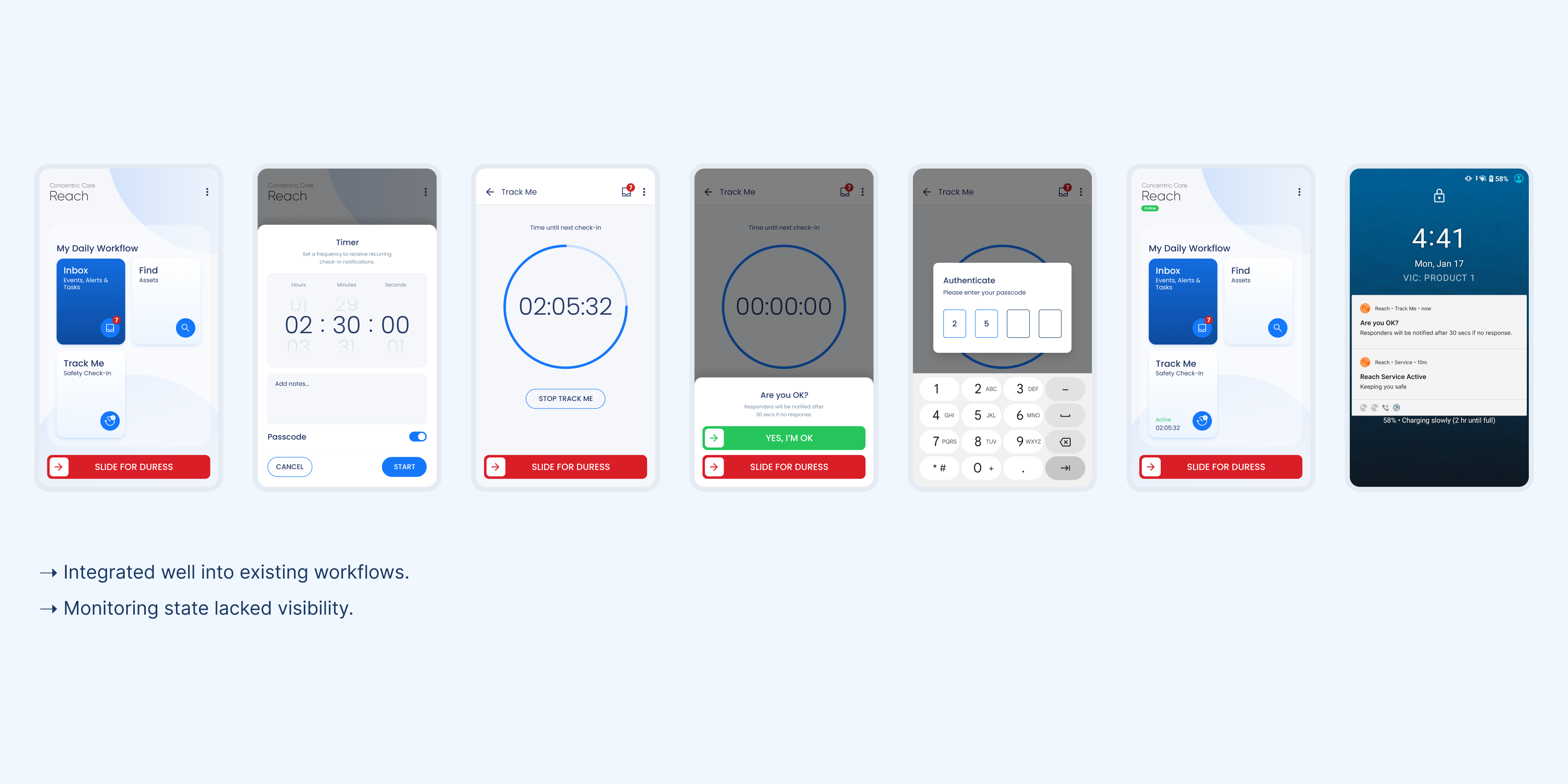
Early concepts integrated monitoring more subtly within existing workflows. Testing revealed that users needed stronger awareness of active monitoring sessions to maintain trust and confidence in the system. This led to the introduction of persistent countdown timers, dedicated monitoring states, notification banners, and clearer separation between monitoring and emergency workflows.
These learnings informed the final solution.
Final Solution
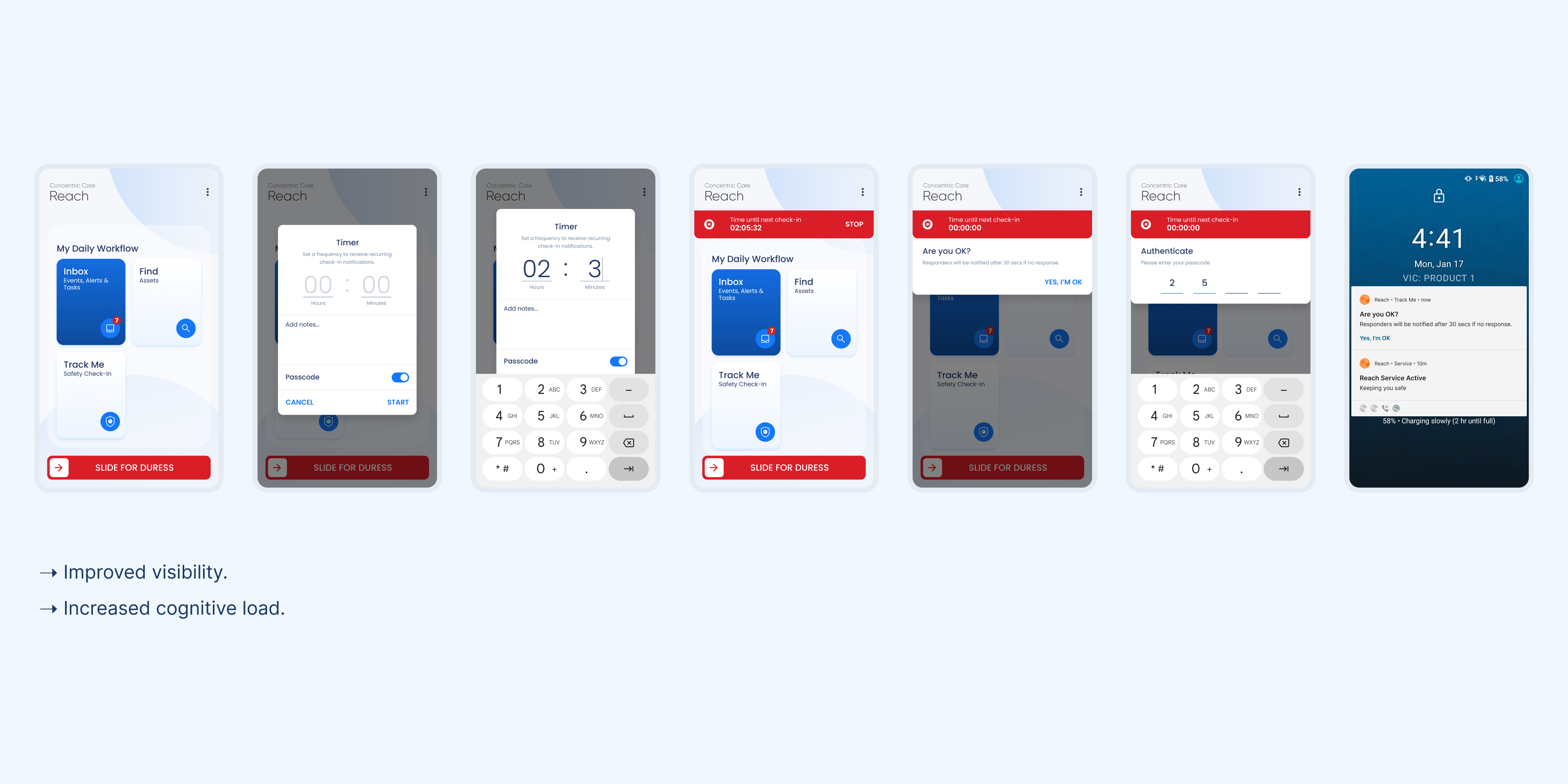
Track Me introduces a proactive safety workflow directly within the Reach platform.
Staff can configure recurring safety check-ins, provide contextual information about the situation, and optionally protect active monitoring sessions with passcode authentication.
Once activated, Track Me displays a persistent monitoring state, periodically requests safety confirmation, and automatically escalates incidents when users fail to respond within the defined timeframe. Responders are notified, duress workflows are initiated, and alarms can later be reviewed and deactivated through structured resolution pathways.
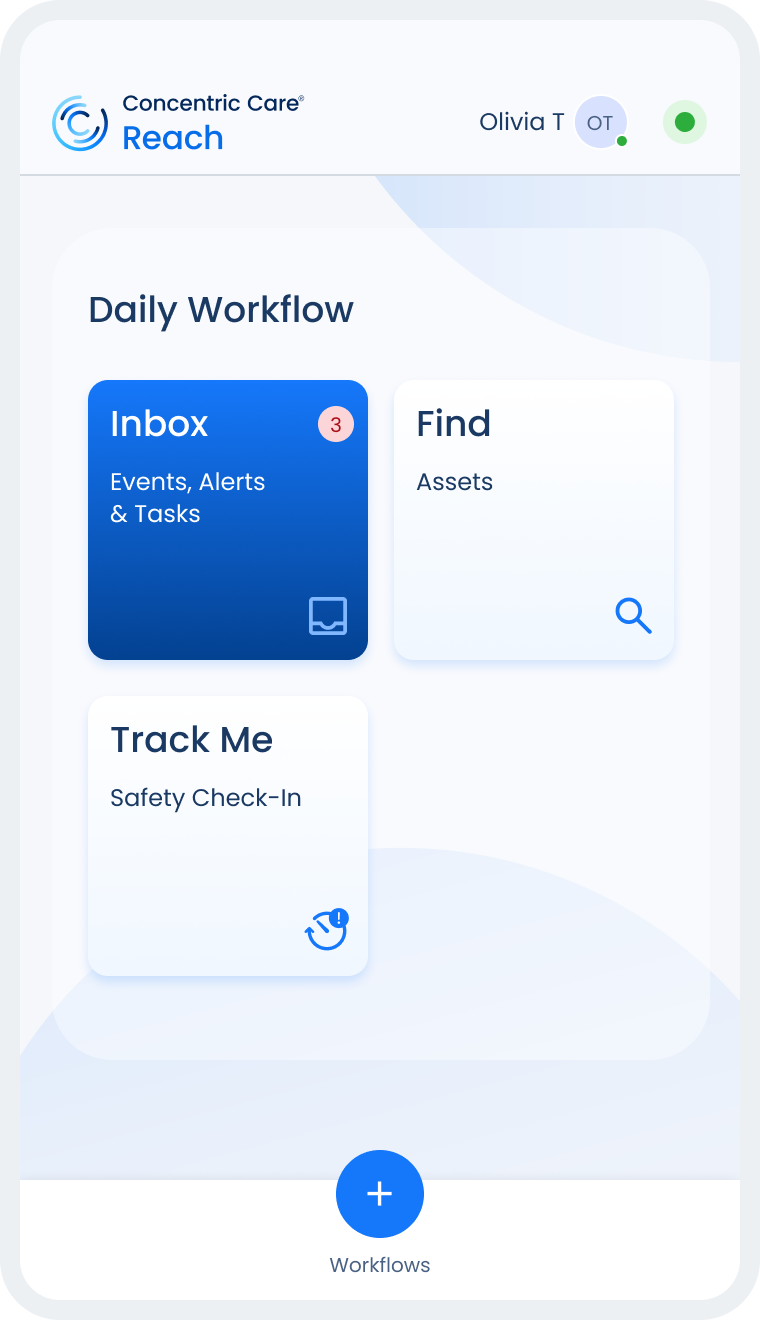
Select the Track Me feature from Concentric Care Reach home.
Set a time for the recurring check-in interval and add notes and a reason if necessary, with the option to select whether to use a passcode or not.
A countdown timer starts with recurring check-ins required to indicate safety.
Once the timer reaches zero, the system requests a confirmation of safety.
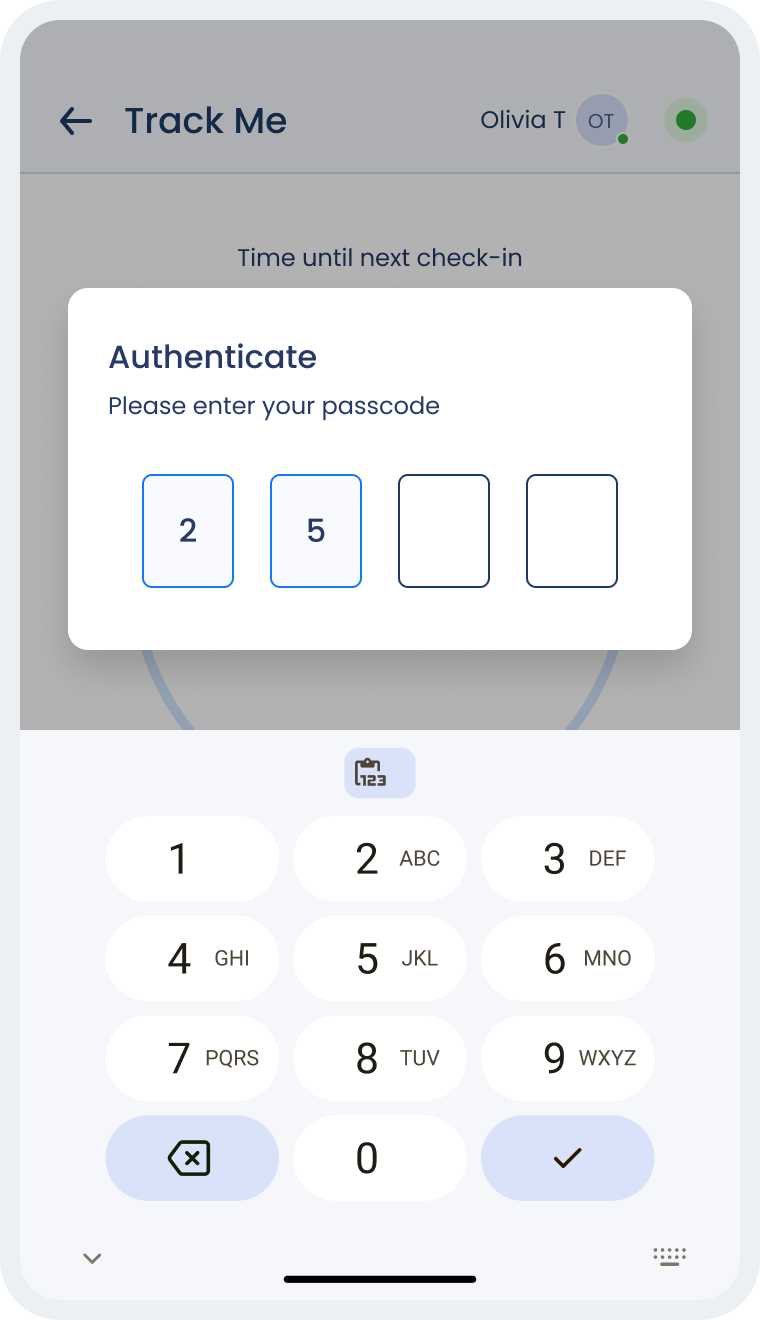
If indicated 'OK' and authenticated, the system continues to request confirmation of safety till stopped periodically.
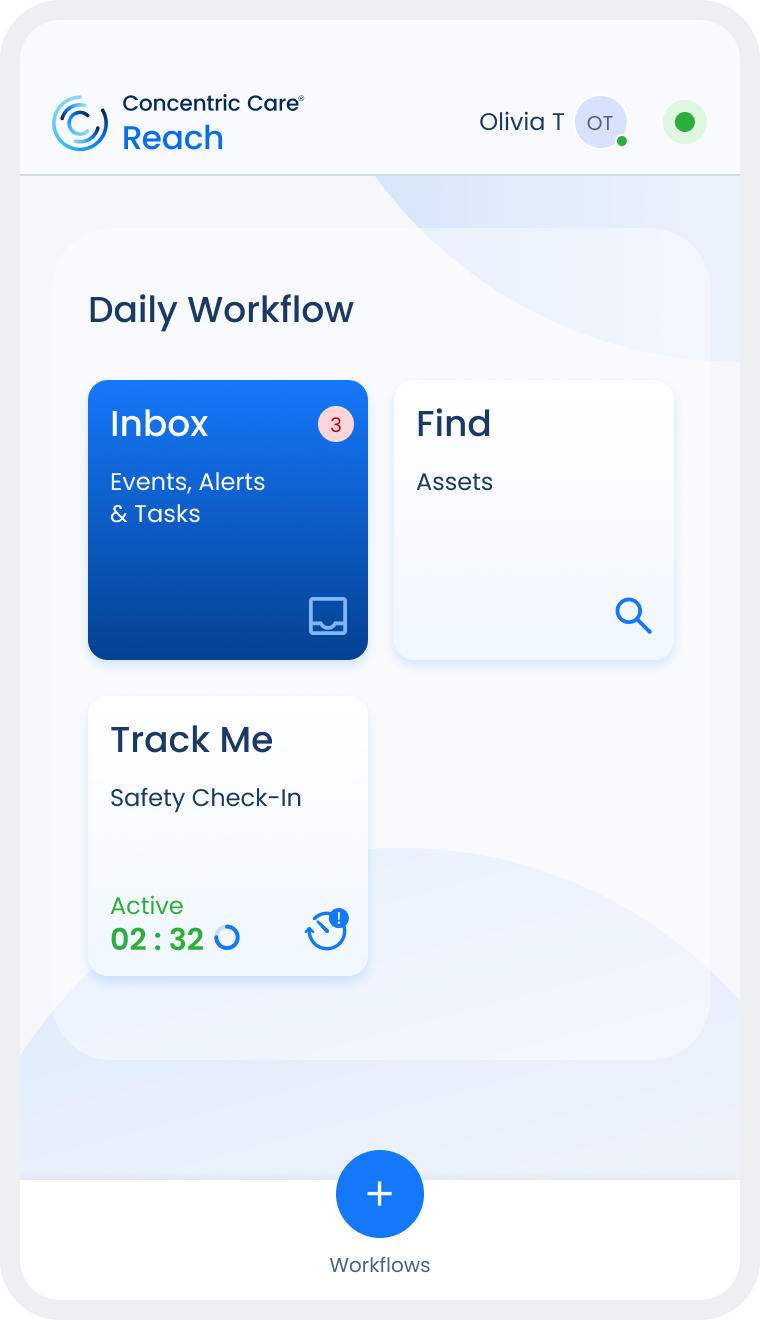
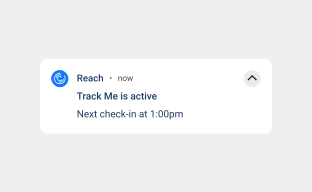
Track Me is active on Concentric Care Reach home.
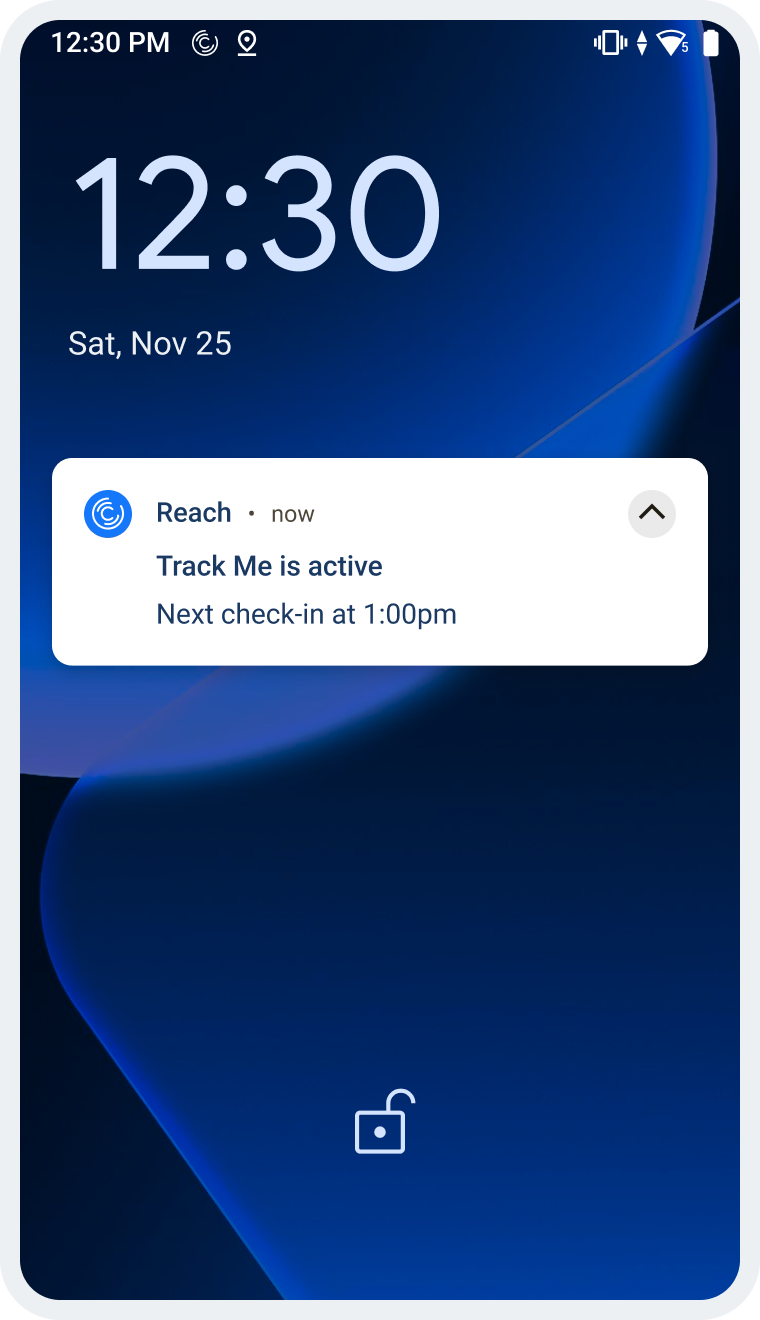
Android notification banner.
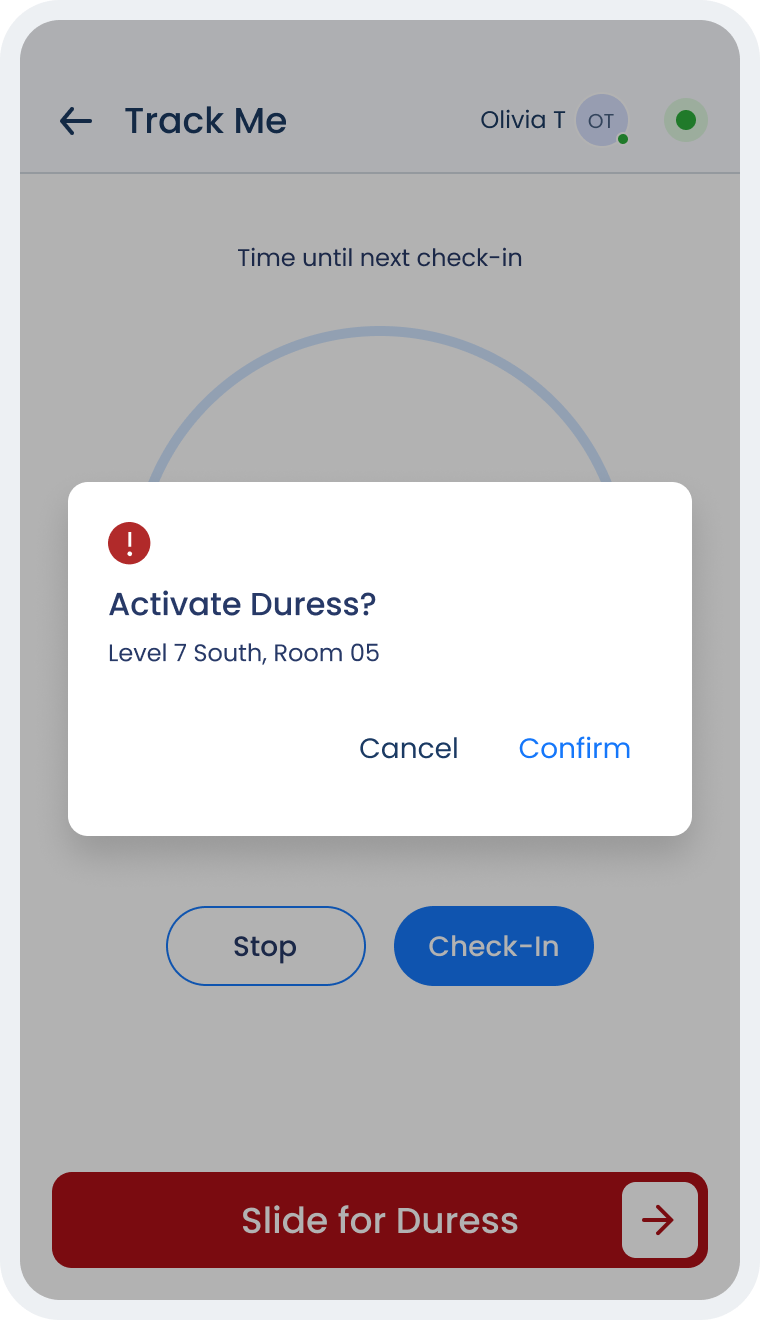
If the user slides for duress, a confirmation is needed.
If there is no response at the check-in stage, the system automatically raises a duress alarm.
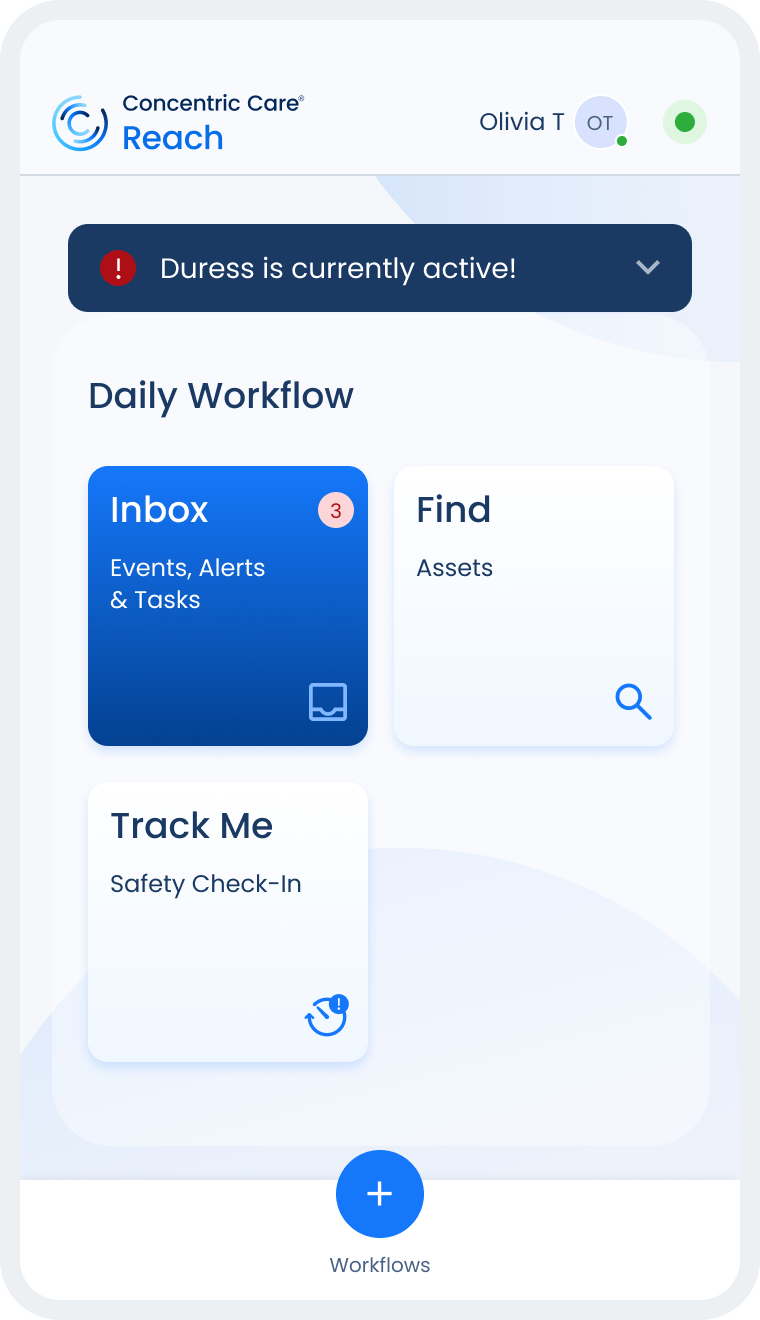
The duress alarm is active on Concentric Care Reach home.
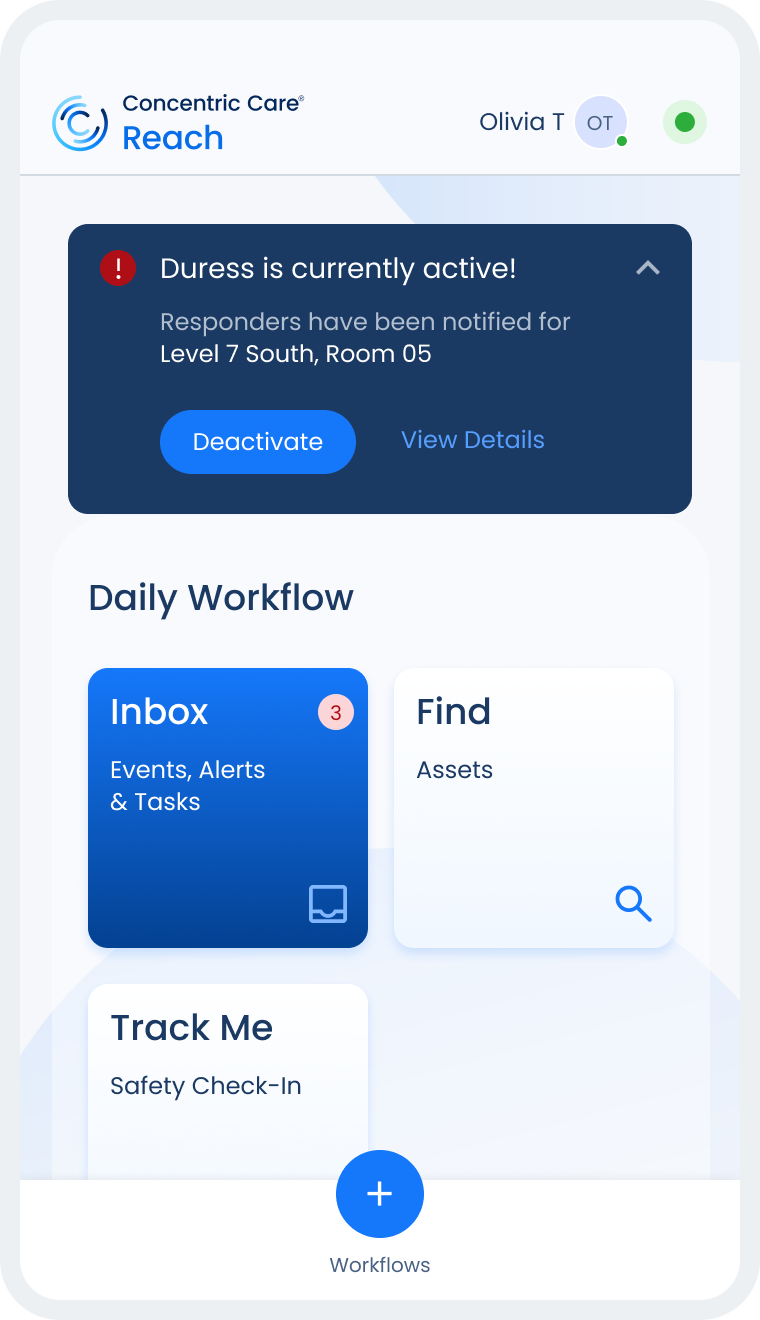
The duress alarm can either be deactivated with a pin, or more details can be viewed.
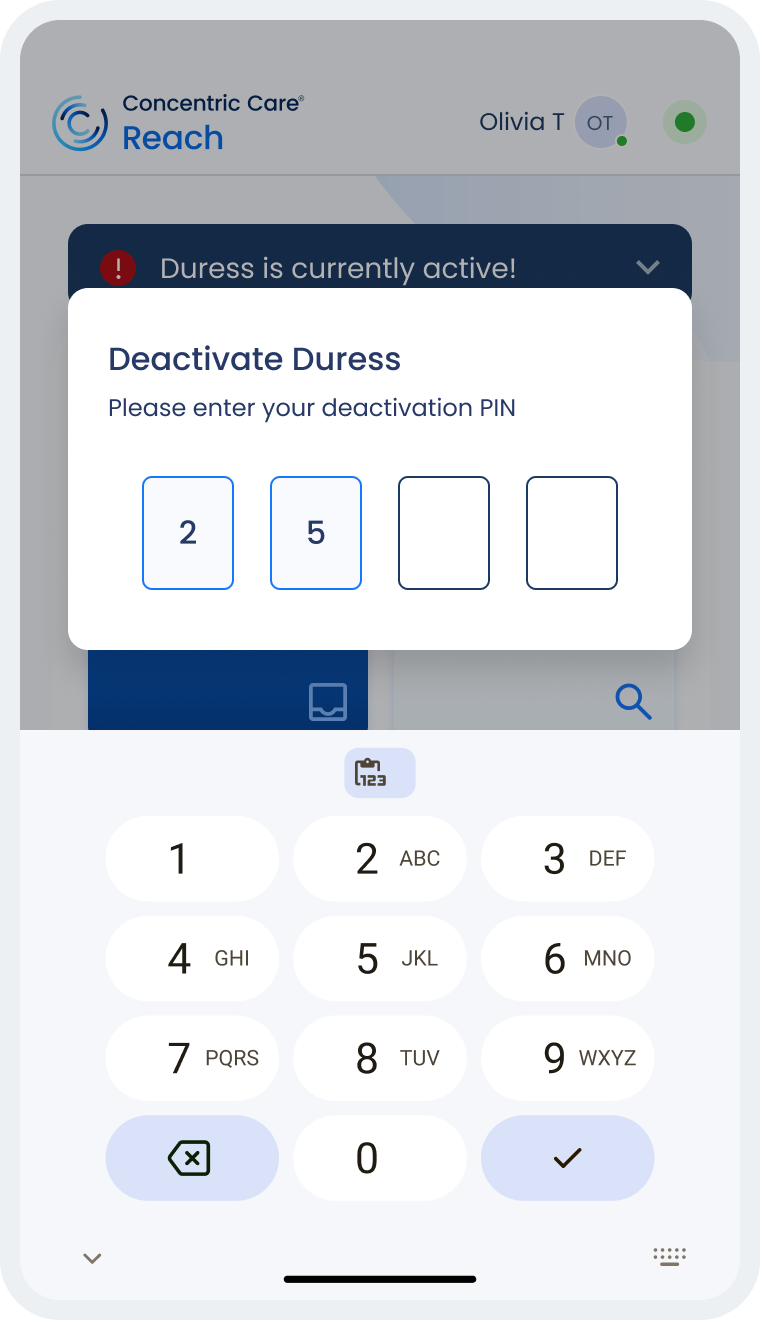
Enter a pin to deactivate the duress alarm.
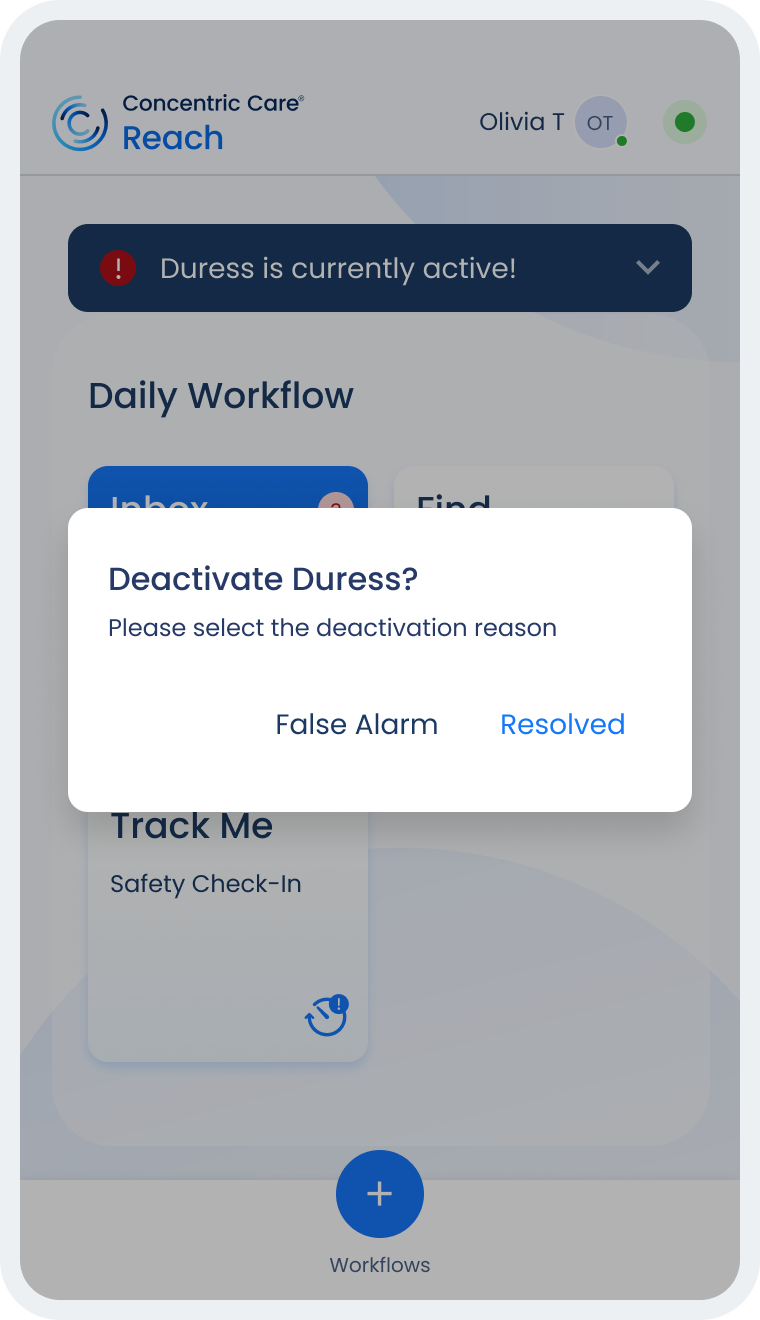
Select the reason for deactivation.
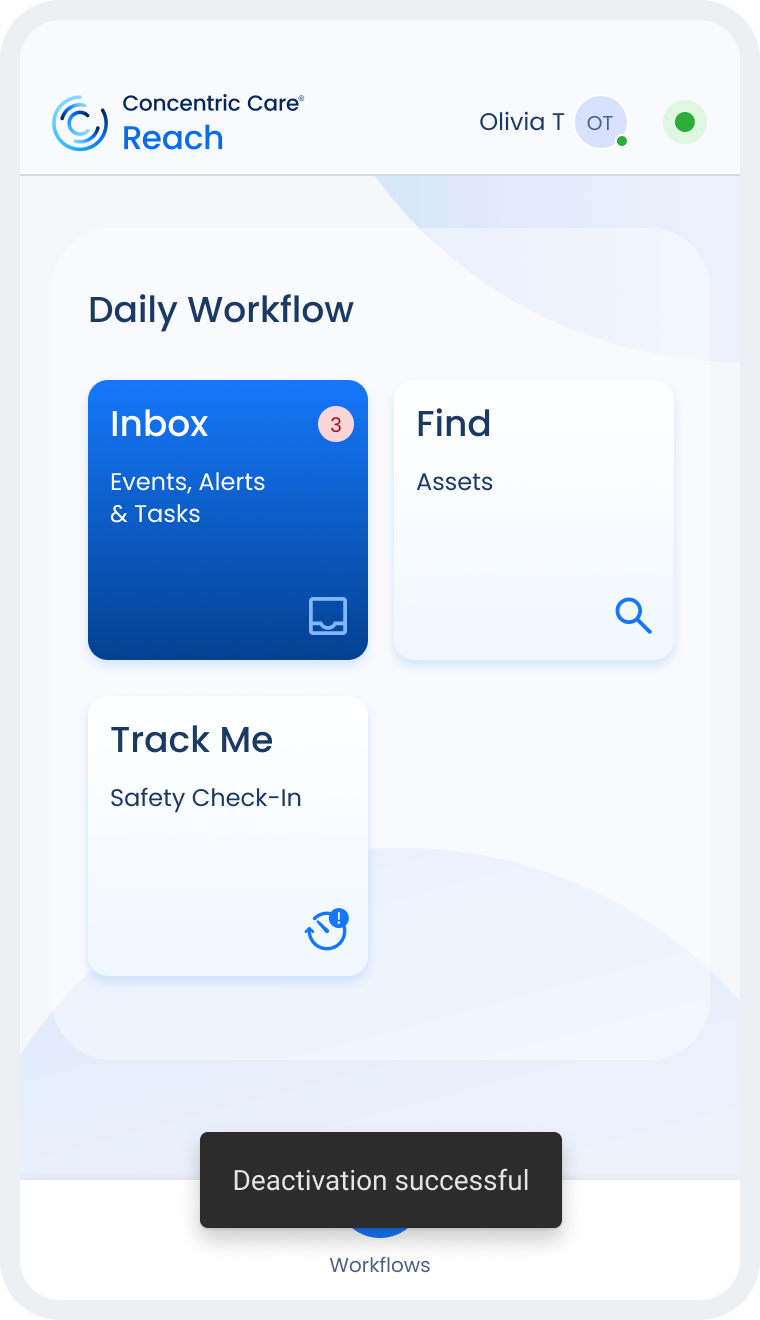
Deactivation successful.
Challenges & Trade-Offs
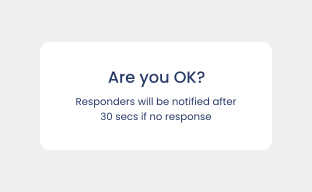
Challenge: False alarms
Decision: Grace period
Trade-off: Slight delay, fewer false positives
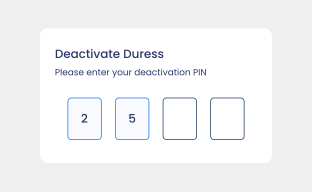
Challenge: Accidental duress deactivation
Decision: Deactivation pin
Trade-off: More security, extra step
Challenge: Visibility vs Disruption
Decision: Lightweight prompts
Trade-off: Better awareness, minimal interruption

Staff Impact
→ Increased confidence in high-risk situations.
→ Reduced reliance on manual alarm activation.
→ Added a layer of personal safety.

Business Impact
→ Expanded Reach's safety capabilities.
→ Strengthened product differentiation.
→ Established a foundation for future safety initiatives.
Future Vision
Version 1 focused on staff operating within healthcare facilities.
Future versions will support community care workers, introducing location-aware escalation, responder allocation, and remote assistance workflows.
Insights from Version 1 will help shape the next evolution of proactive staff safety.
Next Up →
Interested in working together or have a question?
© 2026 Hatim Katawala. Website built with Semplice